Dental Implants vs Dentures: Which Is the Better Long-Term Solution?
Losing one or more teeth can affect much more than your smile. It can make eating difficult, change the way you speak, and sometimes make you feel less confident in social situations.
Losing one or more teeth can affect much more than your smile. It can make eating difficult, change the way you speak, and sometimes make you feel less confident in social situations.
Losing one or more teeth can affect much more than your smile. It can make eating difficult, change the way you speak, and sometimes make you feel less confident in social situations.
Fortunately, there are several ways to replace missing teeth. Two of the most common options are dental implants and dentures.
What Are Dental Implants?
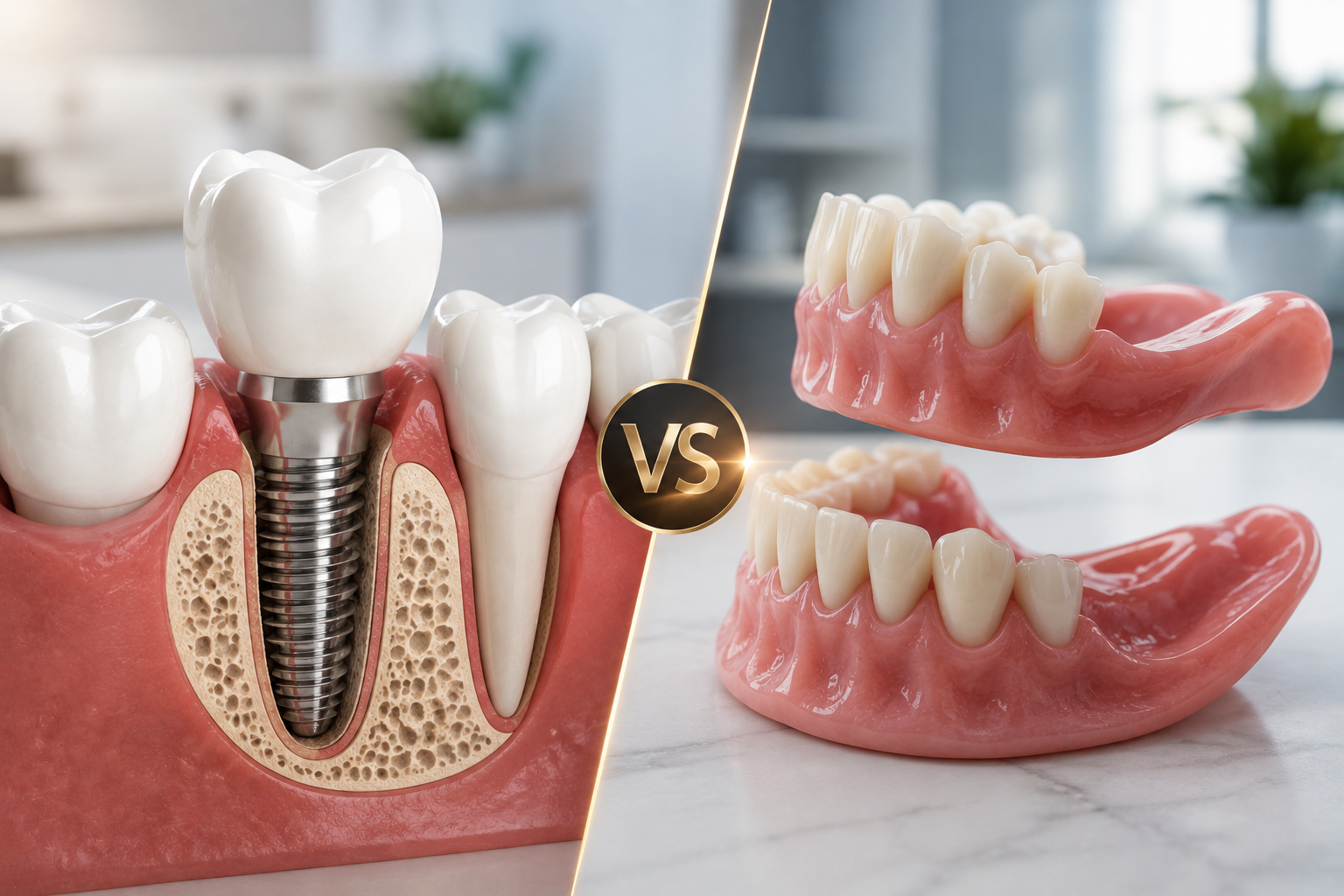
Dental implants are designed to replace missing teeth in a way that closely resembles natural teeth. A small titanium implant is placed into the jawbone, where it acts as an artificial tooth root. After the implant heals and integrates with the bone, an abutment and custom-made crown are attached.
Because the implant is anchored into the jawbone, the replacement tooth feels much more stable than a traditional removable denture.
What Are Dentures?
Dentures are removable dental appliances designed to replace several missing teeth or an entire arch of teeth. Depending on your needs, you may receive partial dentures, complete dentures, or implant-supported dentures.
Dental Implants vs Dentures: The Key Differences
1. Stability and Comfort
Dental implants are anchored into the jawbone, so they don’t normally move around during everyday activities. Traditional dentures can sometimes shift while eating or speaking.
2. Appearance
Dental implants are individually designed to match your surrounding teeth and facial structure. Because they are fixed in place and emerge from the gum similarly to natural teeth, many patients appreciate their natural appearance.
3. Eating and Chewing
Implants provide a more stable foundation and generally allow patients to eat a wider variety of foods comfortably.
4. Jawbone Preservation
Because dental implants are placed into the jawbone, they can help maintain the bone around the implant site. Traditional dentures don’t provide the same stimulation to the jawbone.
5. Maintenance
Dentures need to be removed and cleaned regularly. Implants are cared for more like natural teeth.
How Long Do They Last?
With appropriate care, dental implants can last for many years and, in some cases, decades. Dentures generally don’t last forever either and may need adjustment or replacement over time.
Which Option Is More Affordable?
Traditional dentures generally have a lower initial cost than dental implants. However, cost should not be the only consideration.
Which Is Better: Implants or Dentures?
There isn’t a universal winner.
Dental implants may be the better long-term option if you want: a fixed tooth replacement, greater stability, a natural-looking result, better chewing function, support for jawbone preservation.
Dentures may be more suitable if you: want a non-surgical option, have significant bone loss, need a more affordable initial solution, prefer a removable restoration.
For some patients, implant-supported dentures can provide an excellent middle ground.
Make the Right Choice for Your Smile
At RUH Al Barsha Dental Clinic, our dental team can assess your teeth, gums, jawbone, and overall oral health before recommending the most appropriate tooth-replacement solution. Don’t let missing teeth affect your quality of life. Book your appointment today.
Your symptoms need an individual assessment.
Dental symptoms can have more than one cause. A dentist may need an examination, X-ray or scan before deciding which treatment is appropriate.
Learn more before your consultation.
Explore the relevant treatment guide for suitability, common reasons patients ask about it, the care journey and questions to discuss with your dentist.
Explore Treatment Guides